Ulrich Schroeders
Psychological Assessment · Universität Kassel
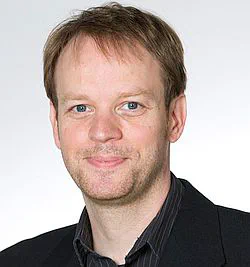
I am a Professor of Psychological Assessment at the University of Kassel. My research focuses on psychological assessment, psychometrics, intelligence, educational measurement, and computational methods in assessment. Across these areas, my goal is to better understand how cognitive abilities can be measured reliably and efficiently, and how assessment can be improved through sound measures and better computational approaches.
Together with colleagues, I am currently working on the PINGUIN project, which develops adaptive tablet-based screening tools for elementary school children, and on the Meta-REP ML project, which examines the methodological rigor and robustness in applied machine learning research.
Resources

Tools & Code
Statistical tools, reproducible examples, code, and practical resources.
Tests & Questionnaires
Open tests, questionnaires, and measurement materials.
Selected Publications
Beyond the hype: A simulation study evaluating the predictive performance of machine learning models in psychology
This simulation study shows that machine learning models in psychological research often do not live up to expectations and are constrained by the same basic data limitations as traditional regression models, especially small sample sizes, low predictor reliability, and small effect sizes.
Developing NOVA: A next-generation open vocabulary assessment
The article describes the development of NOVA—a modern open-access German vocabulary test developed as a transparent alternative to proprietary outdated measures. Moreover, item difficulty can be predicted to a considerable extent from word frequency and word length.
Sample size planning in item response theory: A tutorial
The tutorial structures simulation-based sample size planning for item response theory models into ten key phases, from choosing the data generation model to running the Monte Carlo simulation, and illustrates the procedure with examples from educational, personality, and clinical psychology.
